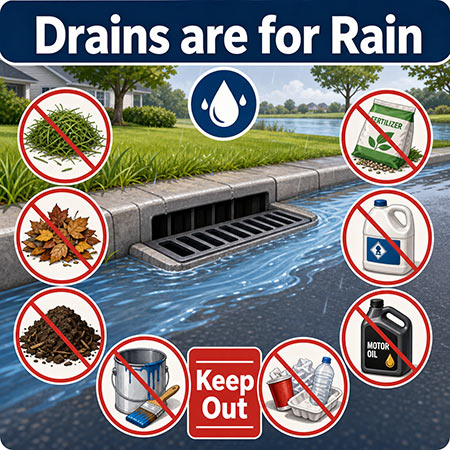
 Storm drains and drainage ditches throughout the community are designed to carry stormwater runoff from rainfall, not trash or yard debris. What many people don’t realize is that stormwater runoff flows into neighborhood lakes, detention ponds, drainage channels, and local bayous without treatment. That means materials dumped or washed into storm drains or ditches can be carried into the water we share with our neighbors and local wildlife.
Materials that could potentially be harmful to our waterways include grass clippings, leaves, soil, mulch, fertilizer, household chemicals, motor oil, paint, litter, and other waste that should never enter the stormwater system. Even small amounts of pollution and debris can have a big impact.
Importantly, it is a violation of HCMUD 71’s Rate Order to dispose of unauthorized chemical or materials in the storm drainage system. Violations of the Rate Order are subject of fines of up to $20,000 per violation.
Trash and Yard Waste Can Pollute Our Lakes and Cause or Worsen Flooding
When yard debris and other waste enter the stormwater system, they may release harmful pollutants and excessive nutrients into the water that can lead to:
- Algae blooms, which rob water of oxygen and harm fish and aquatic life
- Elevated bacteria levels, increasing the risk of illness for people and animals
- Cloudy water, foul odors, and an overall decline in water quality
- Contaminated runoff, as fertilizers and pesticides cling to organic debris
These effects are especially noticeable in detention ponds and neighborhood lakes, where the water is relatively still. Polluted runoff harms the beauty, safety, and health of these shared spaces.
Additionally, when debris and materials are placed into drainage ditches, they can impede the flow of storm water which may cause or worsen flooding in nearby areas.
What You Can Do
- Keep yard waste out of the street and ditch areas
- Use a mulching mower or bag or bundle yard waste for proper disposal
- Avoid using chemicals before heavy rain, and store them properly to avoid spills
- After applying pesticides or fertilizer, sweep and collect any excess off hard surfaces, and water it into the soil
- Secure items intended for trash and recycling pickup
Everyone Has a Role
Lakes, detention ponds, and green spaces are part of what makes the HCMUD 71 community a great place to live. Protecting them is a shared responsibility, and it begins in our own yards.
Clean water and flood prevention start with small actions at home. By keeping trash, yard clippings, and chemicals out of the stormwater system, residents can help preserve the health of our lakes and detention ponds and help reduce the risk of flooding issues.