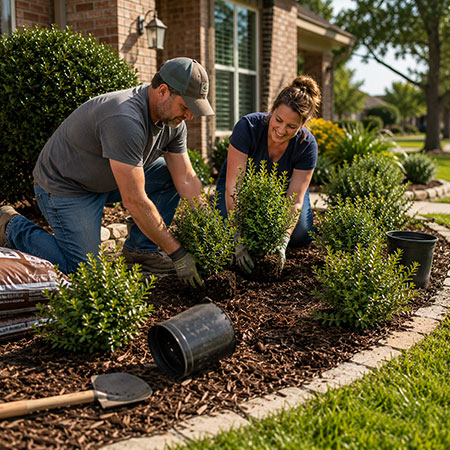
As summer approaches and temperatures begin to rise, conserving water becomes even more important for our community. Outdoor irrigation is often the largest source of residential water use, especially in the warmer months. One of the most effective ways to reduce water consumption without sacrificing curb appeal is to incorporate drought-tolerant plants and water-efficient landscaping practices in your yard.
With a little planning, residents of HCMUD 71 can reduce their water use, protect their plants through droughts, and maintain a beautiful landscape. While you should check your specific HOA guidelines, most water-smart landscaping choices also work well with typical HOA guidelines when planned with a clean, well-maintained appearance in mind.
What plants should you choose? Texas native and adaptive plants are an excellent starting point. These plants have evolved to thrive in our climate and can handle both heat and seasonal drought conditions. Some of the most popular and visually appealing drought-tolerant choices for the Katy area include:
- Esperanza (Yellow Bells): A bright, flowering shrub that thrives in full sun and heat.
- Autumn Sage: A compact, flowering plant with red or pink blooms that attract pollinators.
- Mexican Feathergrass: A soft, ornamental grass that adds texture and survives with minimal watering.
- Lantana: A hardy, flowering groundcover available in a variety of colors.
- Texas Sage (Cenizo): A popular choice for privacy or accent hedges with purple flowers and silvery foliage.
- Yaupon Holly (dwarf or standard): A native evergreen shrub that offers structure without excessive water needs.
Incorporating mulch around flower beds, trees, and shrubs is another simple, yet effective method for retaining soil moisture and reducing the need for frequent watering. Choose hardwood mulch or shredded bark and apply it 2–3 inches deep to help insulate roots, retain water in the soil, and suppress weeds.
Another key principle of water-friendly landscaping is grouping plants with similar water needs. This practice, known as hydrozoning, allows you to water more efficiently by targeting areas with the right amount of water. You should also adjust irrigation schedules seasonally and consider installing a rain sensor on your irrigation controller to avoid unnecessary watering during rainy periods.
Before making significant changes to your front yard landscaping, we recommend checking with your HOA for specific requirements or approval procedures. Many associations have design guidelines that allow flexibility for native plants, so long as the yard remains visually cohesive and well-kept.
With just a few thoughtful plant choices and changes to your watering habits, HCMUD 71 residents can reduce outdoor water use while keeping their yards attractive and HOA-friendly.
For more ideas and region-specific plant recommendations, visit the Texas AgriLife Extension at agrilifeextension.tamu.edu, the Texas SmartScape program at www.txsmartscape.com, or consult with a local nursery or garden center familiar with Katy-area conditions.
Interested in learning more about your water usage? HCMUD 71 residents can sign up for smart water meter tools through EyeOnWater by visiting www.eyeonwater.com/signup. Through EyeOnWater, residents can see daily usage, sign up for automated leak alerts, and identify any unusual water consumption.