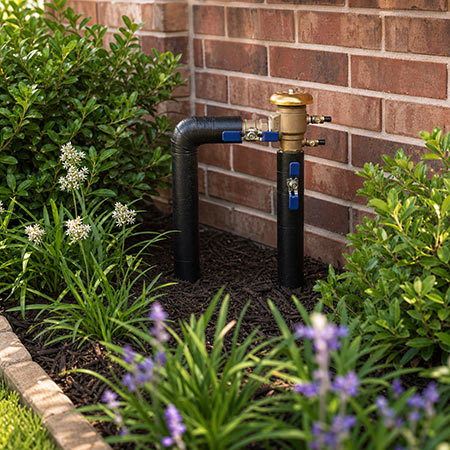
Clean, reliable drinking water depends on keeping public water systems protected from possible sources of contamination. One important way this is done is through backflow prevention devices. Backflow occurs when water flows in the opposite direction from what is intended. Under normal conditions, water moves in pressurized lines from the District’s water system into homes and businesses. However, changes in pressure can sometimes cause water from a private plumbing system, irrigation system, pool, hose, or other source to flow backward into the public water supply. This can happen during disruptive events such as a water main break, firefighting activity, or other sudden changes in system pressure.
Backflow prevention devices are designed to stop this from happening. These devices create a physical barrier that prevents water from flowing back into the drinking water system. They are commonly used and, to ensure the security of the public water supply, are required for irrigation systems, commercial properties, certain plumbing connections, and other locations where a cross-connection could exist.
For many homeowners, the most common potential backflow concern is from their irrigation system. Lawn sprinkler systems may be connected to fertilizer injectors, exposed to standing water, or include sprinkler heads that sit below grade. Without proper protection, changes in pressure could potentially allow water from the irrigation system to be pulled back toward or into the drinking water supply. A properly installed and maintained backflow prevention device helps protect both the homeowner and the community.
HCMUD 71 requires backflow prevention devices on all sprinkler systems, spas, pools, and certain commercial properties. HCMUD 71 may also require other users to install backflow prevention devices per its Rate Order.
Residents can help by making sure any required backflow prevention devices on their property are installed, maintained, and tested as needed. Homeowners should also avoid creating potentially unsafe connections, such as leaving hoses submerged in pools, buckets, or chemical containers. Hose-end sprayers used for fertilizers, cleaners, or pesticides should be disconnected after use and never left attached in a way that could potentially allow chemicals to be drawn back into the public water system.
HCMUD 71 and its operator, Regional Water Corporation, work to protect the District’s drinking water system through monitoring, maintenance, and compliance with State requirements. Backflow prevention is one part of that larger effort. By understanding how backflow happens and taking basic precautions at home, residents can help protect the safety and quality of the drinking water supply
If you have questions on backflow detection devices and when/where they are required, please contact HCMUD 71’s operator, Regional Water Corporation, at (281) 897-9100.