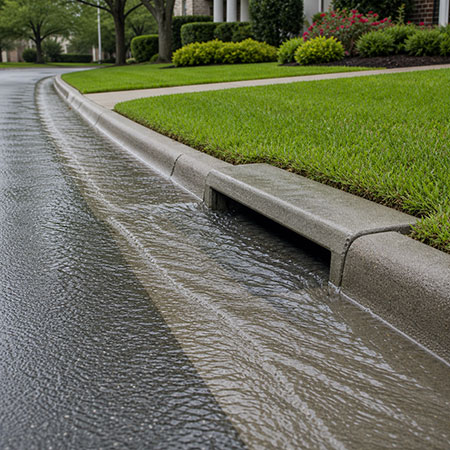
During heavy rainfall, it can be concerning to see water collecting along neighborhood streets. While street flooding should always be taken seriously, some temporary ponding on streets is an intentional part of how many drainage systems are designed to function in Southeast Texas. In Katy-area neighborhoods, streets often serve as part of the stormwater management system during intense rainfall events.
Neighborhood drainage systems are designed to move stormwater away from homes and into storm drains, underground pipes, channels, and detention ponds. During normal rain, water flows along curbs and gutters into storm inlets. During heavier storms, rainfall may fall faster than the system can immediately carry it away. When that happens, streets may temporarily hold water until the storm drains and detention systems can move it downstream.
This temporary storage on the streets helps reduce the risk of water reaching homes and other structures. Streets are typically designed at lower elevations than building foundations, which allows water to collect on the roadway before it threatens homes and other buildings.
Detention ponds also play an important role. These ponds collect stormwater from streets, storm drains, and drainage channels, then release it slowly over time. This controlled release helps reduce downstream flooding and prevents too much water from entering the larger drainage systems all at once.
It is important to understand the difference between designed street ponding and dangerous flooding.
Temporary water in the street during heavy rainfall can be expected, but water that rises toward homes, is moving rapidly, or enters buildings could be a sign of dangerous flooding. Residents should never drive through flooded roadways, even if the water appears shallow. Moving water can be difficult to judge and may hide curbs, debris, or pavement damage.
Residents can help the drainage system function as intended by keeping storm drains and street gutters clear of trash, leaves, grass clippings, and other debris. Trash cans should also be returned to their storage location after pickup, especially when heavy rain is expected, because bins can wash into streets and block drains, increasing the risk of potential flooding.
Maintenance of the drainage system within and around HCMUD 71 is shared between the District, neighborhood homeowners associations, Harris County, and Harris County Flood Control District.
- Harris County maintains the streets and associated storm sewer drains and pipes. For concerns about street or storm sewer flooding or maintenance issues, please contact Harris County Precinct 4’s constituent support department, at (832) 927-4444, or service@hcp4.net.
- HCMUD 71 maintains detention ponds within the District, with some maintained in partnership with the neighborhood’s homeowners association. For concerns related to detention pond maintenance, please contact HCMUD 71’s operator, Regional Water Corporation, at (281) 897-9100.
- Harris County Flood Control District (HCFCD) maintains multiple regional drainage channels within the District, including South Mayde Creek. For concerns related to HCFCD channels, please contact HCFCD’s service request center, at (346) 286-4197.
Street ponding during heavy rain can be inconvenient, but in many cases it is part of a larger system designed to protect homes and other buildings and manage stormwater safely. By understanding how the system works and helping keep drainage paths clear, residents can better recognize what is normal during storms and when a concern should be reported.